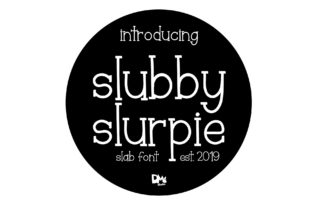
Slubby Slurpie Font for Small Business Branding
Using Slubby Slurpie for Logos and Brand Identity
When establishing a memorable visual identity, the Slubby Slurpie font serves as an exceptional foundation because this slab serif typeface balances personality with professional structure. As a small business owner, your logo is often the first interaction a customer has with your brand, and it needs to communicate trustworthiness without feeling sterile or overly corporate. The distinct weight and confident stance of Slubby Slurpie make it ideal for boutique logos, artisanal food brands, and creative service providers who want to appear established yet approachable. Unlike delicate script fonts that can disappear at small sizes or rigid geometric sans serifs that can feel cold, this specific slab serif offers a warm, tactile quality that translates beautifully across both digital screens and physical signage.
For entrepreneurs in the handmade or craft sector, using Slubby Slurpie in your primary logotype helps bridge the gap between homemade charm and retail-ready professionalism. The font’s sturdy construction ensures that your business name remains legible on everything from a tiny Instagram profile picture to a large storefront banner. When designing your brand identity, consider how the unique character shapes of Slubby Slurpie can become a proprietary asset; because it is stylish yet simple, it avoids looking like generic clip art while still being accessible enough for customers to read instantly. This readability is crucial for searchability and word-of-mouth marketing, ensuring that when someone sees your logo on a product tag or social media post, they can easily recall and search for your business name later.
Slabby Slurpie for Product Packaging and Label Design
Creating cohesive packaging requires fonts that maintain clarity at reduced scales, and Slubby Slurpie excels in this area as a versatile slab serif choice for labels, tags, and boxes. For businesses selling physical goods like candles, cosmetics, baked goods, or apparel, the packaging is a critical touchpoint where typography directly influences perceived value. The robust nature of Slubby Slurpie allows it to hold ink well on textured papers and uncoated cardstocks, preventing the text from bleeding or looking faint on kraft paper or recycled materials. This practical durability makes it a superior choice over thinner display fonts that might get lost in the printing process or fail to meet contrast requirements for product information.
Beyond mere legibility, the mood of Slubby Slurpie adds a layer of curated style to souvenirs and merchandise that elevates them above standard commodity items. Whether you are designing a hang tag for a knit sweater or a sticker for a coffee cup, this font provides enough visual interest to act as a decorative element while remaining functional as a label typeface. Its stylistic simplicity means it pairs effortlessly with regulatory text or ingredient lists set in cleaner sans serif fonts, creating a hierarchy that guides the customer’s eye from the brand name to the essential details. By utilizing Slubby Slurpie consistently across your packaging suite, you create a unified shelf presence that helps loyal customers spot your products quickly in a crowded marketplace or online thumbnail grid.
Slubby Slurpie for Social Media Posts and Digital Quotes
Digital content creation demands typefaces that stop the scroll, and Slubby Slurpie functions as a powerful display font for social media graphics, quote cards, and promotional announcements. In the fast-paced environment of Instagram, Pinterest, and TikTok, your typography must be bold enough to capture attention within seconds while retaining enough character to convey your brand's specific voice. The stylish geometry of this slab serif works particularly well for overlaying text on lifestyle photography or solid color backgrounds, providing high contrast and immediate impact. For coaches, educators, and influencers sharing wisdom or tips, Slubby Slurpie lends an air of authority and warmth to quotes, making the content feel more substantial and shareable than if it were set in a standard system font.
Consistency in social media feeds builds audience recognition, and integrating Slubby Slurpie into your recurring templates creates a visual thread that ties disparate posts together. When used for headlines in carousel posts or as the primary typeface in story highlights, it reinforces your brand identity every time a follower engages with your content. Because the font is designed to be cool yet readable, it performs exceptionally well on mobile devices where screen real estate is limited and clarity is paramount. Entrepreneurs should leverage this versatility by creating a library of pre-designed assets using Slubby Slurpie, streamlining the content creation process while ensuring that every post aligns with the broader aesthetic of the business.
Pairing Slubby Slurpie with Complementary Fonts for Marketing
Achieving professional typographic hierarchy involves combining Slubby Slurpie with supporting fonts, as this slab serif acts best as a headline or accent typeface rather than body copy. While Slubby Slurpie is fantastic for grabbing attention in logos and titles, small business owners should pair it with a neutral sans serif or a clean serif for longer paragraphs, website descriptions, and email newsletters. This combination ensures that your marketing materials remain accessible and easy to digest, preventing visual fatigue for customers reading detailed product descriptions or blog posts. A common and effective pairing strategy is to use Slubby Slurpie for all H1 and H2 headers while reserving a highly legible font like Open Sans, Lato, or Merriweather for the functional text.
This strategic pairing extends to printed marketing collateral such as flyers, menus, and business cards where space is at a premium. On a café menu, for example, Slubby Slurpie can distinguish section headers and special items, guiding the diner’s eye through the offerings, while a simpler font handles the descriptions and pricing. In digital ads, this contrast helps separate the hook from the call-to-action, improving conversion rates by making the ad structure intuitive. Testing these pairings in context before finalizing your brand guidelines is essential; print out mockups or view designs on multiple devices to ensure that the distinctive personality of Slubby Slurpie enhances rather than competes with your informational text.
Licensing Slubby Slurpie for Commercial Products and Client Work
Before deploying Slubby Slurpie across revenue-generating assets, entrepreneurs must verify commercial licensing to protect their business from legal risks associated with unauthorized font usage. Fonts are intellectual property, and the license required for personal projects often differs significantly from what is needed for selling products, creating client deliverables, or embedding type in digital templates. If you plan to use Slubby Slurpie on merchandise for sale, in paid advertising, or as part of a branding package for a client, ensure you have acquired the appropriate commercial license tier. Investing in proper licensing not only keeps your business compliant but also supports the type designers who create these valuable tools, fostering a sustainable ecosystem for creative resources.
Understanding the scope of your license is particularly important for scalable businesses that may grow from selling local souvenirs to national e-commerce distribution. Some licenses cap the number of impressions, units sold, or app downloads, so reviewing the terms of Slubby Slurpie specifically prevents future complications as your sales volume increases. Additionally, if you hire freelance designers or agencies to work on your branding, confirm that they possess valid licenses or that your business account covers their usage. By treating font licensing with the same seriousness as other business expenses, you build a brand foundation that is secure, ethical, and ready for long-term growth without the shadow of copyright infringement.